
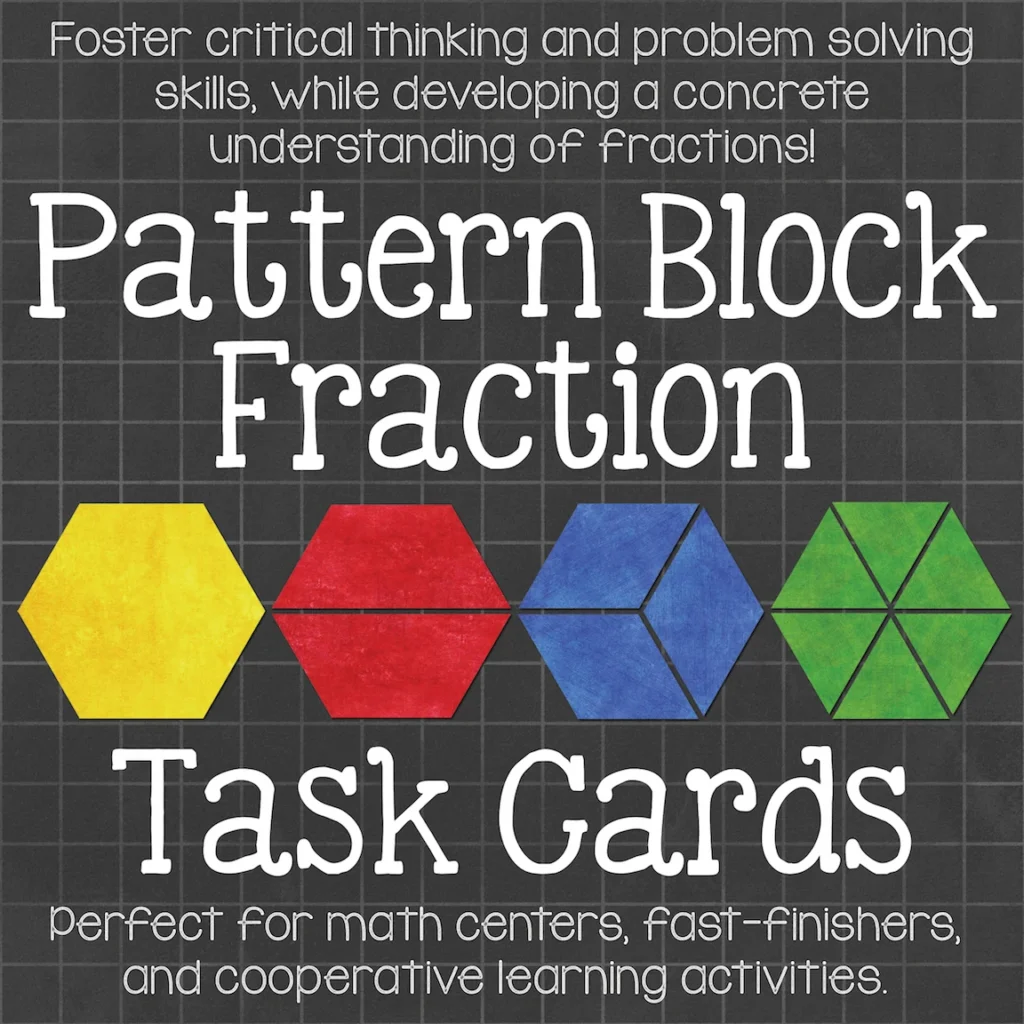
Pattern Block Fraction Task Cards Math Centers
5.0 (596 reviews)Pattern Blocks for older students?! You bet!!! Cultivate a deep understanding of fractions with this engaging, hands-on resource that your students will LOVE! There are 36 different cards in this set, and each one presents a unique, non-routine task using pattern blocks. Your students will utilize
- Grade
- Grade 4, Grade 5, Grade 6
- Subject
- Math
- Pages
- 32
- Answer key
- Included
- Teaching duration
- 4 Weeks
- Digital download
Description
Pattern Blocks for older students?! You bet!!!
Cultivate a deep understanding of fractions with this engaging, hands-on resource that your students will LOVE! There are 36 different cards in this set, and each one presents a unique, non-routine task using pattern blocks. Your students will utilize critical thinking and problem solving skills, all while developing a deep and solid grasp of fractions. Step away from the procedures and rules and engage students in a valuable and meaningful way!
What’s Included:
•Organizational and instructional tips
•36 thought-provoking and engaging task cards
•Student answer sheet for recording work
•Answer key
•Printable pattern block shapes (in color and black-and-white)
Skills Covered:
•Fractional relationships
•Equivalent fractions
•Basic operations (adding, subtracting, dividing, multiplying) with fractions applied within the context pattern blocks
•Spatial reasoning
•Problem solving and critical thinking
Save money and purchase this as part of theHands-on Math: Build Your Own Bundle!
Problem Solving with Pattern Blocks 1
Problem Solving with Pattern Blocks 2
Brain Power Math: Non-Routine Problem Solving {Book A}
Time to Tile: Equivalent Fractions
Time to Tile: Mixed Numbers and Improper Fractions
Time to Tile: Adding and Subtracting
Get all the latest Teacher Thrive news!
➜FOLLOW me on Teachers Pay Teachers!
➜FOLLOW me on TeacherThrive.com!
Please read: This is a nonrefundable digital download. Please read the description carefully and examine the preview file before purchasing.
© Copyright 2018 M. Tallman. All rights reserved. Permission is granted to copy pages specifically designed for student or teacher use by the original purchaser or licensee. This is intended to be used by one teacher unless additional licenses have been purchased. The reproduction of any other part of this product is strictly prohibited. Copying any part of this product and placing it on the Internet in any form (even a personal/classroom website) is strictly forbidden. Doing so makes it possible for an Internet search to make the document available on the Internet, free of charge, and is a violation of the Digital Millennium Copyright Act (DMCA).
Reviews
Showing 5361–5365 of 5,412 reviews
A great resource for Intervention!
I like the set-up, but I have to go in and change several things b/c the exercises don't require the students to do what is required of the actual Common Core standard. Ex, students do know figurative language. The Daily Language wants the students to find the origin, meaning & write a sentence. The origin is not part of the standard. I feel it's better for the students to determine the meaning using context clues (instead of just looking it up), then write their own sentence. Instead, I give them a sentence using the idiom. Then they must determine, the meaning using the context clues I've provided in the sentence. Then they must write their own sentence using the idiom. I do the same thing for the proverb/adage on the Wednesday section.
The prefix section- I change it around & have the students to identify the prefix. Determine the meaning of the prefix, then then the meaning of the word. I do understand that when creating this product, it's created to serve teachers all over that may have different standard that they must follow. I'd like to send examples of how I tweak the Daily Language.
Hello. Thank you for taking the time to leave such detailed feedback. While the origin is not part of the standard, students find this information very interesting and knowing the origin does help students retain the meaning. I will also add that the act of finding the origin is a common core standard: "Consult reference materials (e.g., dictionaries, glossaries, thesauruses), both print and digital, to find the pronunciation and determine or clarify the precise meaning of key words and phrases." I am happy to hear that you have been able to adapt this resource to meet your teaching needs, though.
Kind of high expectations before reading -- concepts are challenging for many younger students with nothing concrete from which to build references. With the right group, it would be great.
great resource
Very clear. My only suggestion would be more text structures and lines in the boxes.
Questions & Answers (4)
Have a question about this resource? Log in to ask a question.
Is there a way to make the numbers less "squished?" ie. the 11 is hard to read. Thanks!
I am not sure what you mean. Are you opening the file from the latest version of Adobe Reader?
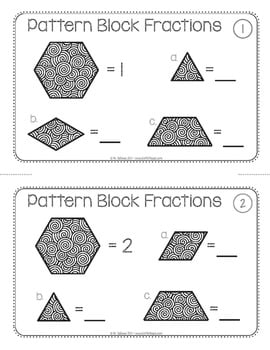
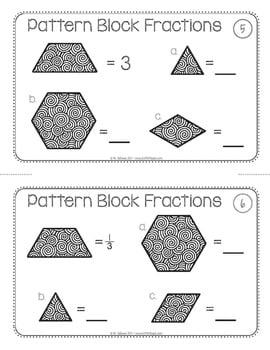
I've worked a couple of these with extreme difficulty. What is the number next to the pattern block supposed to represent? for example on task card 3, 1/2 = hexagon. It would be helpful to have an example.
Hi Carin! The number is telling you what that piece equals. You use that information to determine what the other pieces equal. Check out the answer key and it might make more sense.
I believe card 22 is unsolveable due to question 4 and card 12 is also unsolveable because of clue 3. Could you please check and verify in case I am mistaken
Hello. This resource doesn't have "clues". Are you referring to something else?
One card correctly filled in would help. I don't understand what students are supposed to do.
Hello! There is an answer key at the back of the resource with pictures of how the pieces are supposed to be arranged for each card.
