
Finding Multiples Math Centers Math Tiles
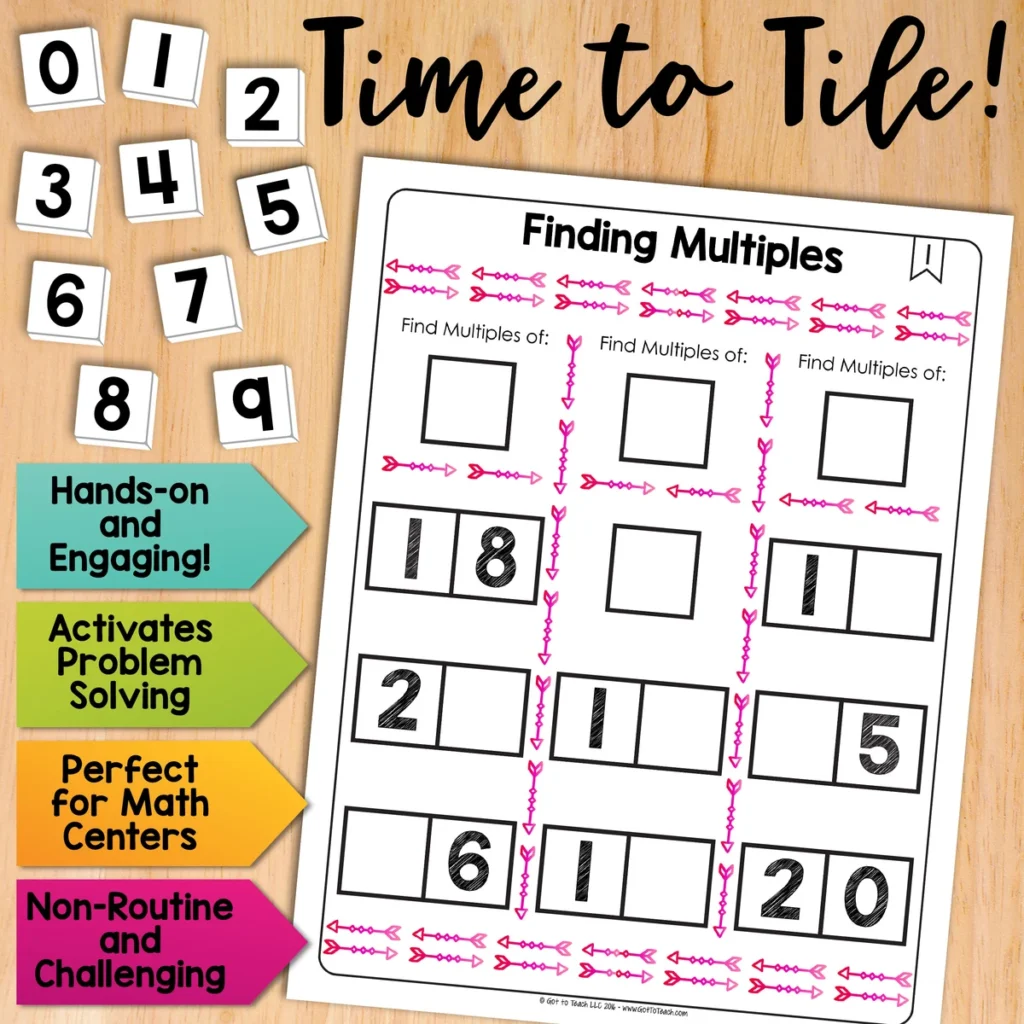
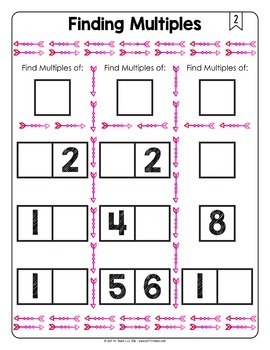
5.0 (66 reviews)Help students recognize multiples with 0–9 number tile puzzles. The first 15 cards use consecutive multiples, and the next 15 skip some multiples so students have to decide which numbers fit.
- Subject
- Math
- Pages
- 71
- Answer key
- Included
- Teaching duration
- 1 Month
- Digital download
Description
Help students recognize multiples with 0–9 number tile puzzles. The first 15 cards use consecutive multiples, and the next 15 skip some multiples so students have to decide which numbers fit.
Why use Math Tiles?
- Make problem solving hands-on by letting students move number tiles and test their ideas.
- Build flexible thinking as students follow different clues and try more than one strategy.
- Practice perseverance and build confidence by revising a choice when the first idea doesn’t fit.
- Give students meaningful independent practice or have partners explain and compare their thinking.
- Save paper by reusing printed cards and having students record their answers on a separate sheet.
What’s included
- 30 puzzle cards in color and black and white
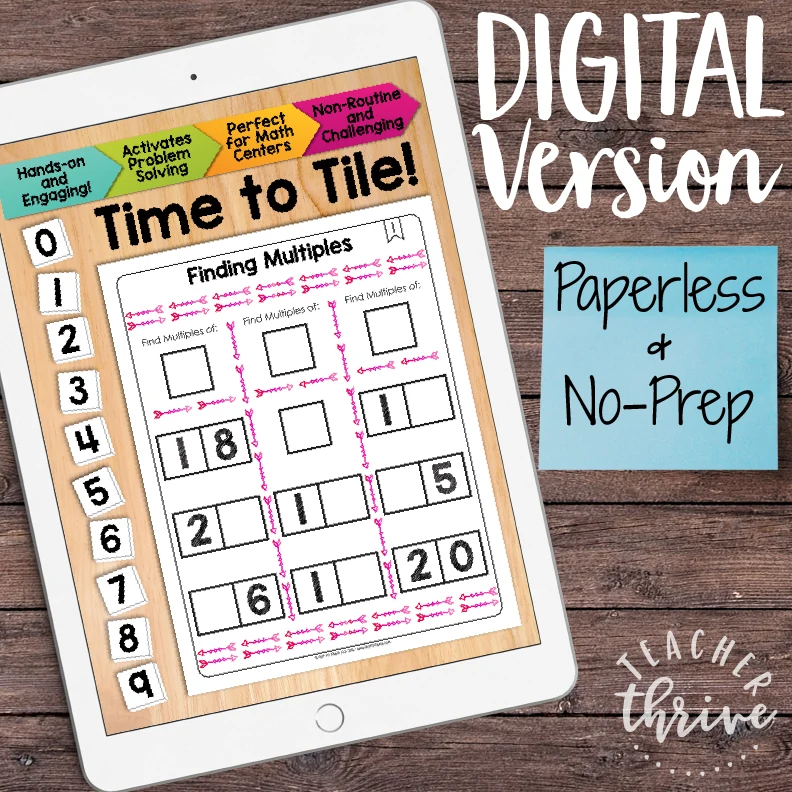
- Google Slides version with movable number tiles
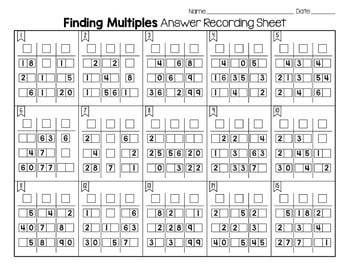
- Student recording sheet
- Answer keys
- Teacher setup tips
- Printable 0–9 number tiles
How to use it
Use the first group to introduce the routine, then move to the second group or offer a multiplication chart for support. For print, cut out the included number tiles or use a set you already have. In Google Slides, students move the tiles in edit mode.
More Time to Tile puzzles
Keep the same puzzle routine with Greatest Common Factor and Least Common Multiple Math Tiles or Skip Counting Multiplication Facts Math Tiles.
🧮 Browse all Math Tiles Centers
Please read: This is a nonrefundable digital download. Please read the description carefully and examine the preview file before purchasing.
© Copyright 2018 M. Tallman. All rights reserved. Permission is granted to copy pages specifically designed for student or teacher use by the original purchaser or licensee. This is intended to be used by one teacher unless additional licenses have been purchased. The reproduction of any other part of this product is strictly prohibited. Copying any part of this product and placing it on the Internet in any form (even a personal/classroom website) is strictly forbidden. Doing so makes it possible for an Internet search to make the document available on the Internet, free of charge, and is a violation of the Digital Millennium Copyright Act (DMCA).
Reviews
Showing 271–275 of 375 reviews
Wished it was more than just interjections
I use this 3rd grade bundle for our morning work. I teach 4th grade this year and wanted morning work that my students could do as a spiral review that did not require me to teach the content each day. Each week students get one math sheet, one ELA sheet, and then a social studies sheet from a separate bundle. My students have no issue with the math but struggle with the ELA. I've found that much of the content is not taught in our curriculum. My students struggle with activities like comparative/superlative, simple/complex sentences, and a few others since they were not taught it. I'm going to continue to use the math bundle, but have discontinued using the ELA bundle. I would love to see it better aligned to what was taught in third grade, such as cause and effect, main ideas, the author's purpose, etc.
<p>This resource is not designed around a particular scope and sequence since many teachers follow different timelines.</p><p>Since Daily Spiral Reviews cover all standards, students are exposed to concepts they may not have had formal instruction on. Unfamiliar content presents a great opportunity for you to build background knowledge and assess where your students are before you even teach a specific lesson.</p><p>The best way to use this spiral reveiw is to begin with whole-group lessons where you model and discuss each activity. I don't worry too much if there haven't been formal lessons on a particular concept; I treat those items more as a preview. After a few weeks, the students really start grasping the format, and you can begin to transfer the workload to them. Eventually, when the students work independently on the review, you will spend time correcting and discussing their work in class. </p><p>As mentioned above, students will encounter concepts they are unfamiliar with. This is a GOOD thing, I promise! We don't always have the answers or know the procedures to solve problems. It's beneficial to expose students to "unknowns"; they become less sensitive to the uncomfortable feeling of "not knowing" and are less likely to panic. </p><p>However, you can always use the editable version (open in PowerPoint) to remove/change any review items you like.</p>
Good Resource
I have to add a section onto each slide for the student name. If I forget, I can't tell which students did which work. I think I prefer the print version, but was glad to have this for those times we were virtual.
Thank you!
Questions & Answers (1)
Have a question about this resource? Log in to ask a question.
I love using this set of tile pages and so do my students. However, unlike some of your other tile sets I've used in the past, it seems like some of the pages may have more than one correct answer. Are there specific rules that students must follow in order to "correctly" solve the pages? (Other than, of course, having the correct multiples under the correct factors)
Hi Grace! For several of my math tiles, there may be 2-3 variations of answers. As far as "rules", the multiples are all in ascending order, though not necessarily in consecutive order.
