
Finding Multiples Math Centers Math Tiles
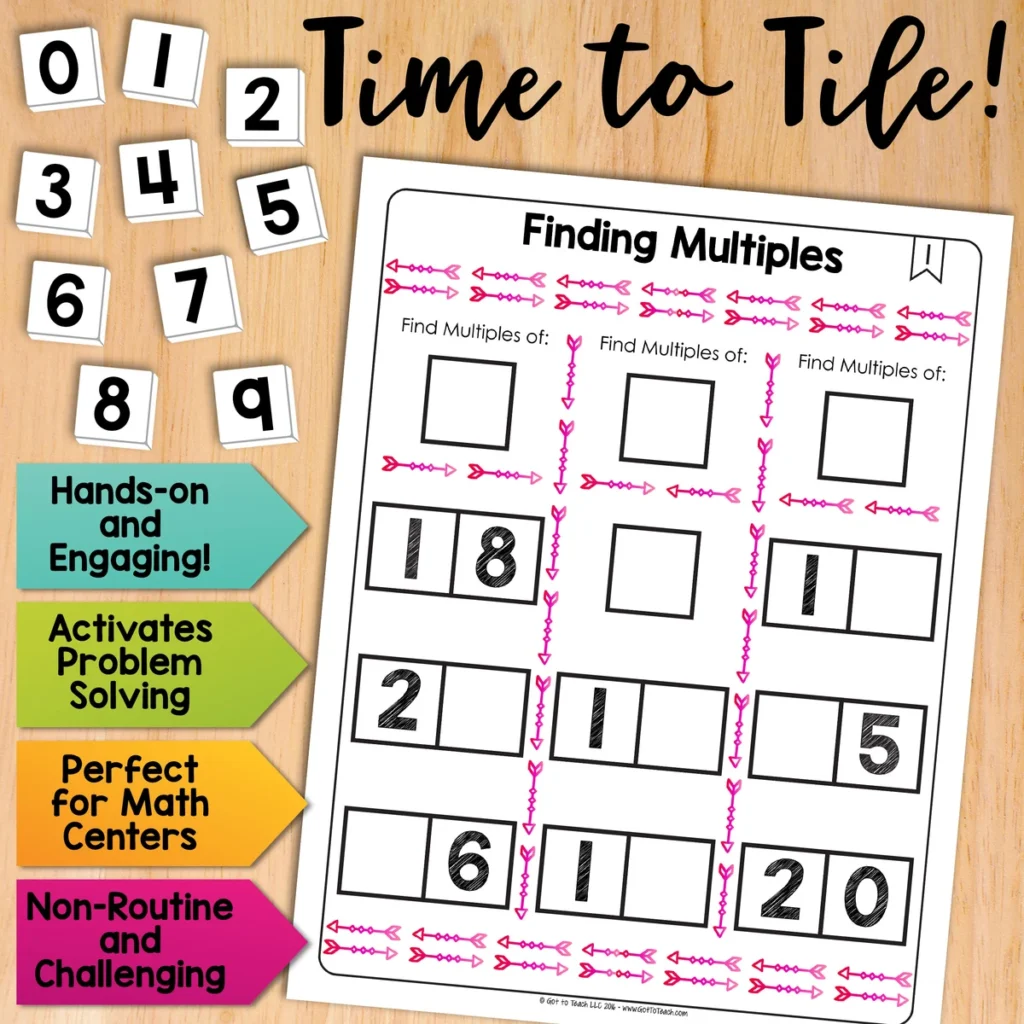
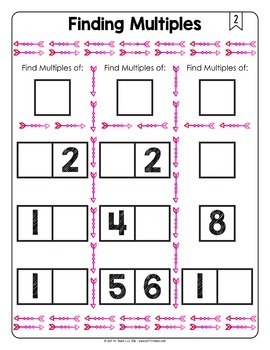
5.0 (66 reviews)Help students recognize multiples with 0–9 number tile puzzles. The first 15 cards use consecutive multiples, and the next 15 skip some multiples so students have to decide which numbers fit.
- Subject
- Math
- Pages
- 71
- Answer key
- Included
- Teaching duration
- 1 Month
- Digital download
Description
Help students recognize multiples with 0–9 number tile puzzles. The first 15 cards use consecutive multiples, and the next 15 skip some multiples so students have to decide which numbers fit.
Why use Math Tiles?
- Make problem solving hands-on by letting students move number tiles and test their ideas.
- Build flexible thinking as students follow different clues and try more than one strategy.
- Practice perseverance and build confidence by revising a choice when the first idea doesn’t fit.
- Give students meaningful independent practice or have partners explain and compare their thinking.
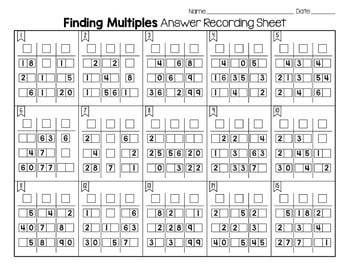
- Save paper by reusing printed cards and having students record their answers on a separate sheet.
What’s included
- 30 puzzle cards in color and black and white
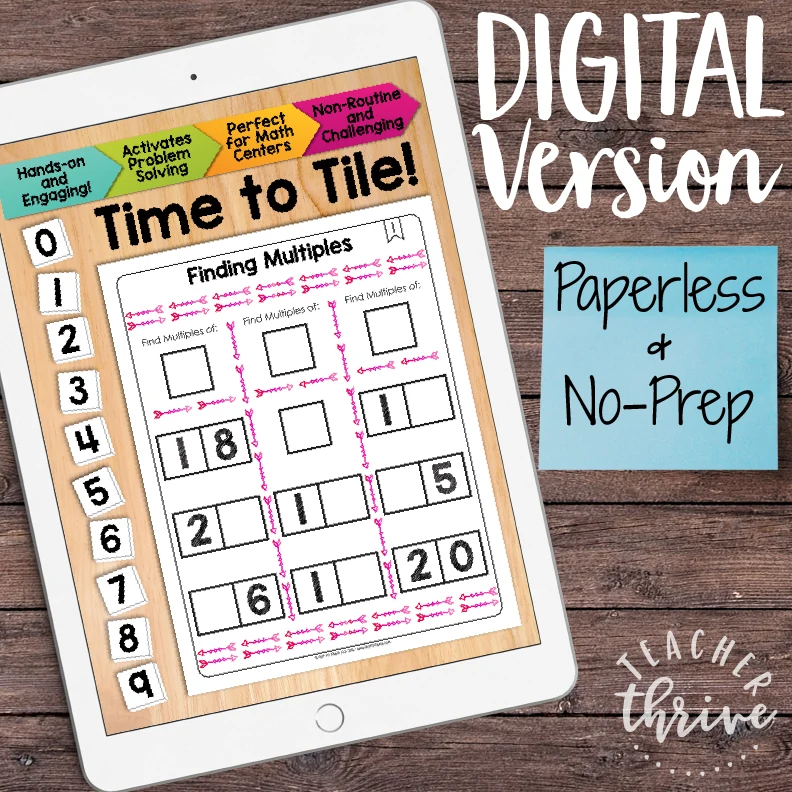
- Google Slides version with movable number tiles
- Student recording sheet
- Answer keys
- Teacher setup tips
- Printable 0–9 number tiles
How to use it
Use the first group to introduce the routine, then move to the second group or offer a multiplication chart for support. For print, cut out the included number tiles or use a set you already have. In Google Slides, students move the tiles in edit mode.
More Time to Tile puzzles
Keep the same puzzle routine with Greatest Common Factor and Least Common Multiple Math Tiles or Skip Counting Multiplication Facts Math Tiles.
🧮 Browse all Math Tiles Centers
Please read: This is a nonrefundable digital download. Please read the description carefully and examine the preview file before purchasing.
© Copyright 2018 M. Tallman. All rights reserved. Permission is granted to copy pages specifically designed for student or teacher use by the original purchaser or licensee. This is intended to be used by one teacher unless additional licenses have been purchased. The reproduction of any other part of this product is strictly prohibited. Copying any part of this product and placing it on the Internet in any form (even a personal/classroom website) is strictly forbidden. Doing so makes it possible for an Internet search to make the document available on the Internet, free of charge, and is a violation of the Digital Millennium Copyright Act (DMCA).
Reviews
Showing 631–635 of 83,542 reviews
An awesome resource
I noticed a need with my students needing to refrence previous lessons, this filled the hole perfectly. Students look forward to completing their math journal every Monday.
Great resource
This was a great resource to use for teaching comparing and contrasting nonfiction texts.
Great for morning work
This was a great daily “Do Now” for my classes! It gave students consistent practice to review previously learned skills, while also providing predictability and routine. I especially loved that students had the opportunity to retry problems they had missed from the previous week, helping them learn from their mistakes and build confidence.
Student Engagement
I love this resource for teaching prefixes and suffixes. The students were engaged with the lessons. It allowed them to be creative in a simple way.
A great grammar unit!
This resource is very helpful and easy to use! It does a great job of keeping my 3rd-grade students engaged.
Questions & Answers (1)
Have a question about this resource? Log in to ask a question.
I love using this set of tile pages and so do my students. However, unlike some of your other tile sets I've used in the past, it seems like some of the pages may have more than one correct answer. Are there specific rules that students must follow in order to "correctly" solve the pages? (Other than, of course, having the correct multiples under the correct factors)
Hi Grace! For several of my math tiles, there may be 2-3 variations of answers. As far as "rules", the multiples are all in ascending order, though not necessarily in consecutive order.
