
3rd Grade Chronological Order Nonfiction Text Reading Comprehension Passages
4.9 (30 reviews)Teaching order and sequence (chronological order) nonfiction text structure doesn’t have to be overwhelming. This reading comprehension unit includes high-interest leveled passages, graphic organizers, keyword analyses, text-dependent reading response questions, and assessments. You will have…
- Grade
- Grade 3
- Subject
- Reading
- Pages
- 56 Pages
- Answer key
- Included
- Teaching duration
- 2 Weeks
- Digital download
Description
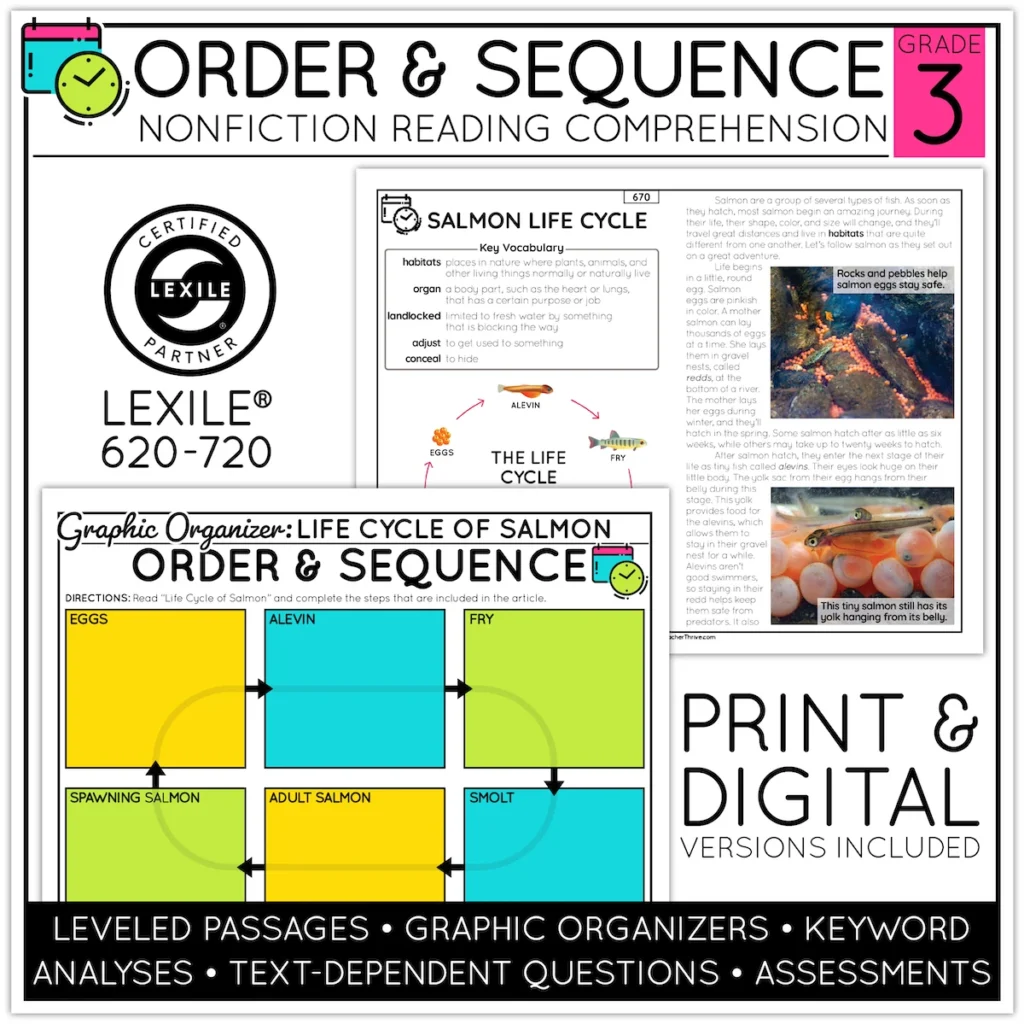
Teaching order and sequence (chronological order) nonfiction text structure doesn’t have to be overwhelming. This reading comprehension unit includes high-interest leveled passages, graphic organizers, keyword analyses, text-dependent reading response questions, and assessments. You will have everything you need to teach, reinforce, and assess chronological order text structure.
All components listed below are provided in print and digital versions.
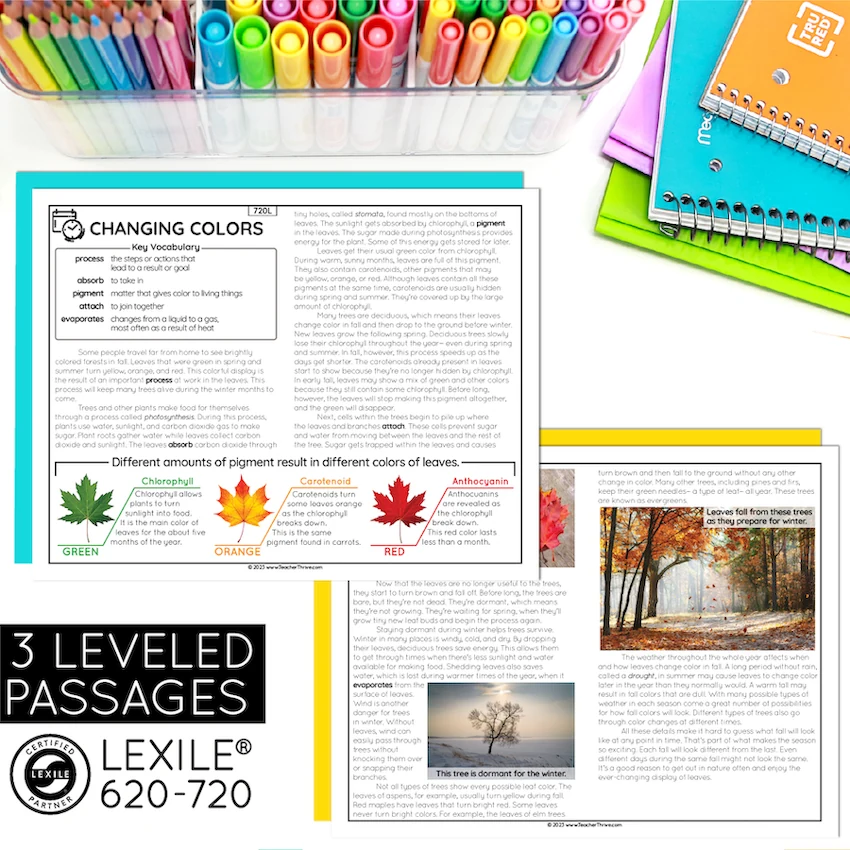
3 Leveled Passages: High-interest and professionally written. Include nonfiction text features (Images, Diagrams, Infographics, Graphs, Charts, Illustrations, Tables, Maps, Captions, and Keywords)
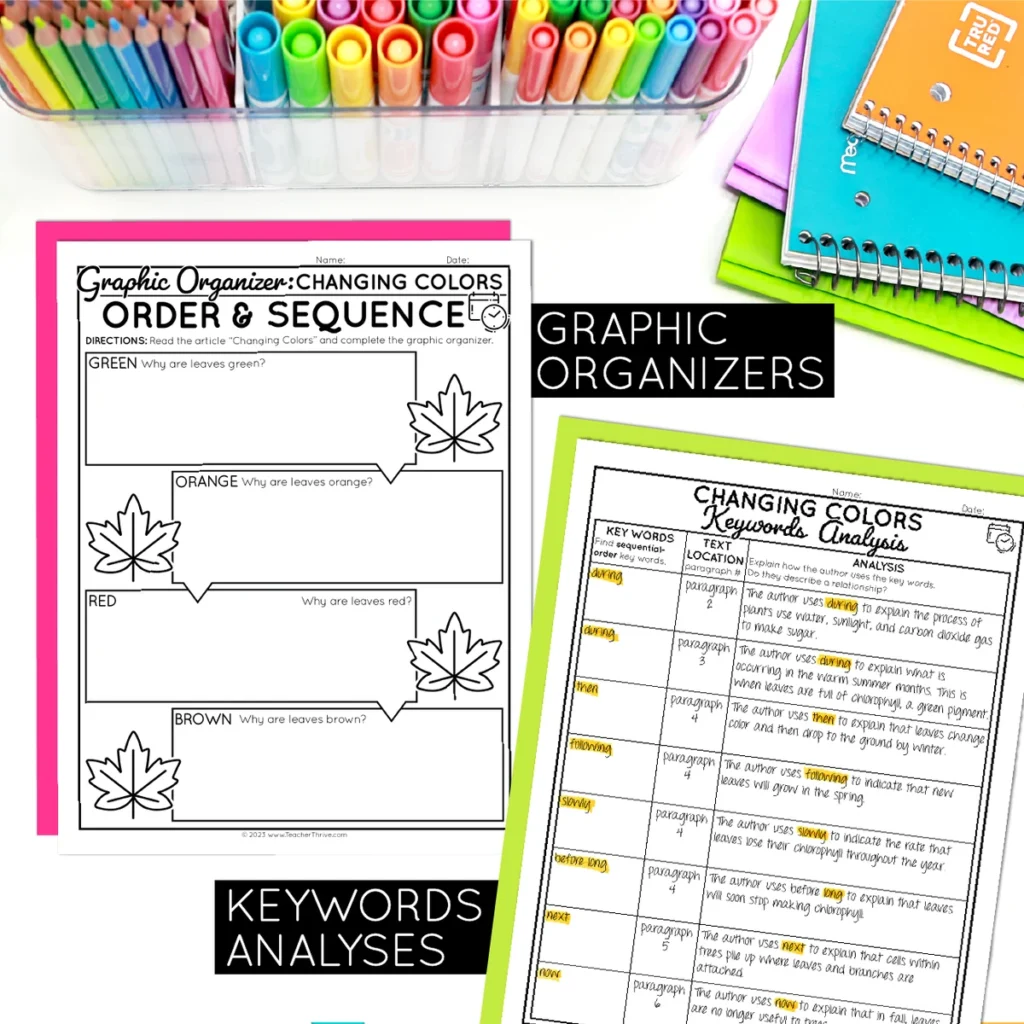
3 Graphic Organizers: Graphic organizers that are customized for each passage. Provide a visual representation of the text structure and passage, which helps with reading comprehension and writing skills.
3 Keyword Analyses: Students will find the specific cause-and-effect keywords and analyze how they are used in the articles. Keywords Analyses deepen student understanding of nonfiction text structures and help them build expository writing skills.
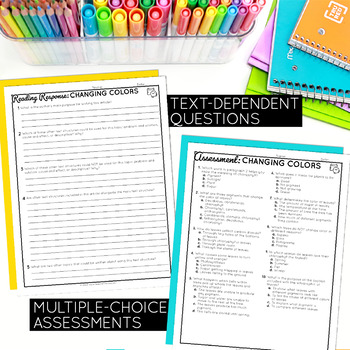
3 Reading Responses: 10 short-answer reading response questions for each passage. These text-dependent questions can be used for, Closed Reading, Guided Reading, Shared Reading, Independent Work, Writing/Journal Prompts
3 Assessments: Each passage comes with a 10-question multiple-choice assessment. Teachers can use these assessments at the end of each unit to direct further instruction.
What grade level is this resource designed for?
The passages in this resource are leveled between 640-740 Lexile. This Lexile range typically aligns with third-grade students reading near grade level. Teachers can use this resource with students in other grades if the Lexile level is appropriate. There are no grade-level labels or indicators on the student pages of this resource.
Other Third-Grade Nonfiction Text Structure Units:
- Cause and Effect
- Compare and Contrast
- Descriptive
- Order and Sequence (Chronological Order)
- Problem and Solution
BUNDLE ALERT: Get all 5 text structure units and save 25%!
Get all the latest Teacher Thrive news!
➜FOLLOW me on Teachers Pay Teachers!
➜FOLLOW me on TeacherThrive.com!
Please read: This is a nonrefundable digital download. Please read the description carefully and examine the preview file before purchasing.
© Copyright 2023 M. Tallman. All rights reserved. Permission is granted to copy pages specifically designed for student or teacher use by the original purchaser or licensee. This is intended to be used by one teacher unless additional licenses have been purchased. The reproduction of any other part of this product is strictly prohibited. Copying any part of this product and placing it on the Internet in any form (even a personal/classroom website) is strictly forbidden. Doing so makes it possible for an Internet search to make the document available on the Internet, free of charge, and is a violation of the Digital Millennium Copyright Act (DMCA).
Reviews
Showing 5361–5365 of 5,412 reviews
A great resource for Intervention!
I like the set-up, but I have to go in and change several things b/c the exercises don't require the students to do what is required of the actual Common Core standard. Ex, students do know figurative language. The Daily Language wants the students to find the origin, meaning & write a sentence. The origin is not part of the standard. I feel it's better for the students to determine the meaning using context clues (instead of just looking it up), then write their own sentence. Instead, I give them a sentence using the idiom. Then they must determine, the meaning using the context clues I've provided in the sentence. Then they must write their own sentence using the idiom. I do the same thing for the proverb/adage on the Wednesday section.
The prefix section- I change it around & have the students to identify the prefix. Determine the meaning of the prefix, then then the meaning of the word. I do understand that when creating this product, it's created to serve teachers all over that may have different standard that they must follow. I'd like to send examples of how I tweak the Daily Language.
Hello. Thank you for taking the time to leave such detailed feedback. While the origin is not part of the standard, students find this information very interesting and knowing the origin does help students retain the meaning. I will also add that the act of finding the origin is a common core standard: "Consult reference materials (e.g., dictionaries, glossaries, thesauruses), both print and digital, to find the pronunciation and determine or clarify the precise meaning of key words and phrases." I am happy to hear that you have been able to adapt this resource to meet your teaching needs, though.
Kind of high expectations before reading -- concepts are challenging for many younger students with nothing concrete from which to build references. With the right group, it would be great.
great resource
Very clear. My only suggestion would be more text structures and lines in the boxes.
Questions & Answers (0)
Have a question about this resource? Log in to ask a question.
No questions yet.
